
Stamp Duty and Registration Charges in Tamil Nadu
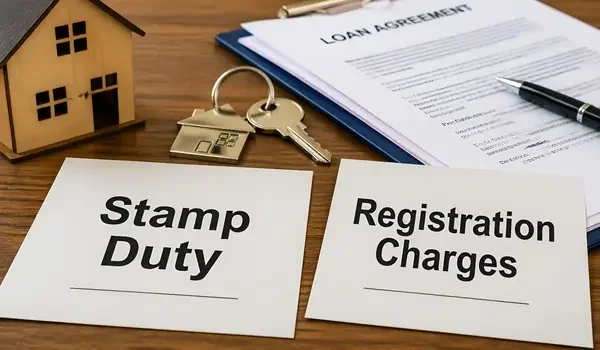
Stamp duty in Tamil Nadu currently stands at 7 percent of your property's market value, and registration charges add another 4 percent on top of that. Together, these two costs bring your total statutory outgo to 11 percent of whichever figure is higher between the actual sale price and the government's guideline value for that locality. This applies to a straightforward sale deed for an apartment, a villa, or a plot anywhere in the state, and it sits outside the base cost your builder or seller quotes you.
Buyers often treat this 11 percent as an afterthought once they finalise a property, but it changes your total budget by a meaningful amount on a high value home. If you are evaluating a project like Sobha Wisteria in Siruseri, where prices start from ₹1.85 crore, this charge alone can run into several lakhs, so it deserves the same attention you give to your loan eligibility and down payment.
How Stamp Duty and Registration Actually Get Calculated
The Tamil Nadu Sub-Registrar office calculates both charges on the higher of two figures, the price written into your sale deed or the government guideline value notified for that specific street or locality. This rule exists precisely to stop buyers and sellers from under-declaring a transaction to save on statutory costs. Guideline values get revised periodically by the state government, and they tend to sit closer to actual market rates in fast-growing corridors, so you should always check the current guideline value for your chosen locality before you assume your quoted price will be the base figure used.
Once the base value gets fixed, the math itself stays simple. Multiply that value by 7 percent for stamp duty and by 4 percent for registration, then add the two together for your total statutory cost. A few smaller charges, such as document handling or franking fees, usually add another few thousand rupees on top.
Current Stamp Duty and Registration Rates Across Deed Types
Rates in Tamil Nadu differ depending on what kind of document you are registering, and most buyers only need the sale deed row below.
| Deed Type | Stamp Duty | Registration Fee |
|---|---|---|
| Sale deed (apartment, house, plot) | 7% of value | 4% of value |
| Gift deed | 7% of value | 4% of value |
| Simple mortgage | 1% of value, capped at ₹40,000 | 1% of value, capped at ₹10,000 |
| Mortgage with possession | 4% of value | 1% of value, capped at ₹2,00,000 |
| Lease up to 99 years | 4% of value | 1% of value, capped at ₹20,000 |
A concessional registration rate also applies to women buyers on properties valued up to ₹10 lakh, where the registration fee drops from 4 percent to 3 percent. Since most apartment purchases today cost well above that threshold, this concession rarely applies to a mid or premium segment home, including every configuration at Sobha Wisteria.
What This Costs on a Project Like Sobha Wisteria
A worked example makes the 11 percent easier to plan around than a percentage figure alone. Take the entry level 2 BHK at Sobha Wisteria, priced at ₹1.85 crore during the current pre-launch stage. Stamp duty on this unit works out to roughly ₹12.95 lakh, and registration adds close to ₹7.40 lakh, taking your combined statutory cost to about ₹20.35 lakh over and above the base price.
| Configuration | Price Range | Stamp Duty + Registration (11%) |
|---|---|---|
| 2 BHK | ₹1.85 Cr to ₹2.18 Cr | ₹20.35 Lakh to ₹23.98 Lakh |
| 3 BHK Compact | ₹2.52 Cr to ₹2.86 Cr | ₹27.72 Lakh to ₹31.46 Lakh |
| 3 BHK Premium | ₹3.02 Cr to ₹3.53 Cr | ₹33.22 Lakh to ₹38.83 Lakh |
| 3 BHK + Study | ₹3.70 Cr to ₹4.03 Cr | ₹40.70 Lakh to ₹44.33 Lakh |
| 4 BHK | ₹4.70 Cr to ₹5.88 Cr | ₹51.70 Lakh to ₹64.68 Lakh |
These figures use the current pre-launch price band and the standard 11 percent rate. Treat them as an estimate, since your bank or the Sub-Registrar office may apply the calculation against the actual guideline value at the time you register, which can differ slightly from the quoted sale price.
Why This Amount Sits Outside Your Home Loan
Banks generally do not fund stamp duty or registration as part of your home loan, since lenders calculate the loan to value ratio against the property price alone. This means you need to arrange the full 11 percent from your own savings, on top of the down payment your bank does not cover. If you are budgeting for a home at Sobha Wisteria or any comparable OMR project, add this figure to your margin money calculation early, rather than discovering the gap right before your registration date.
How to Pay Stamp Duty and Registration in Tamil Nadu
Most buyers today complete this payment through e-stamping, which the Tamil Nadu government has made the standard route for property transactions. The broad steps look like this.
- Confirm the guideline value for your property's locality through the Tamil Nadu registration department website
- Generate the e-stamp certificate for the applicable stamp duty amount through an authorised centre or bank
- Pay the registration fee separately, either online or at the Sub-Registrar office covering your property's jurisdiction
- Book a slot at the Sub-Registrar office and carry your sale deed, identity proof, and PAN card for the final registration
- Collect your registered sale deed once the Sub-Registrar completes the process, since this document proves legal ownership
Budgeting for the Real Cost of Your Home
Stamp duty and registration together add 11 percent to whatever price you agree to pay for a property in Tamil Nadu, and this cost sits entirely outside your loan and your builder's quoted rate. Factor this into your total budget from the start, whether you are buying a resale flat, a plot, or a pre-launch home like Sobha Wisteria on OMR Road. A buyer who plans for this figure early avoids the scramble that often happens right before registration day, when the gap between the expected cost and the actual statutory bill becomes hard to ignore.
FAQs
Stamp duty in Tamil Nadu stands at 7 percent of the property's market value or the guideline value, whichever is higher.
Registration charges add a further 4 percent of the property value, taking your combined cost to 11 percent along with stamp duty.
It gets calculated on whichever figure is higher between the two, so a below-market sale price will not reduce your statutory cost.
Women buyers get a reduced registration rate of 3 percent instead of 4 percent, but only on properties valued up to ₹10 lakh.
No. Banks calculate your loan against the property price alone, so you need to arrange stamp duty and registration from your own funds.
At the standard 11 percent rate, this works out to roughly ₹20.35 lakh, split between ₹12.95 lakh in stamp duty and ₹7.40 lakh in registration.